
Game guides
How to Play Mines: Bombs, Multipliers and Knowing When to Cash Out
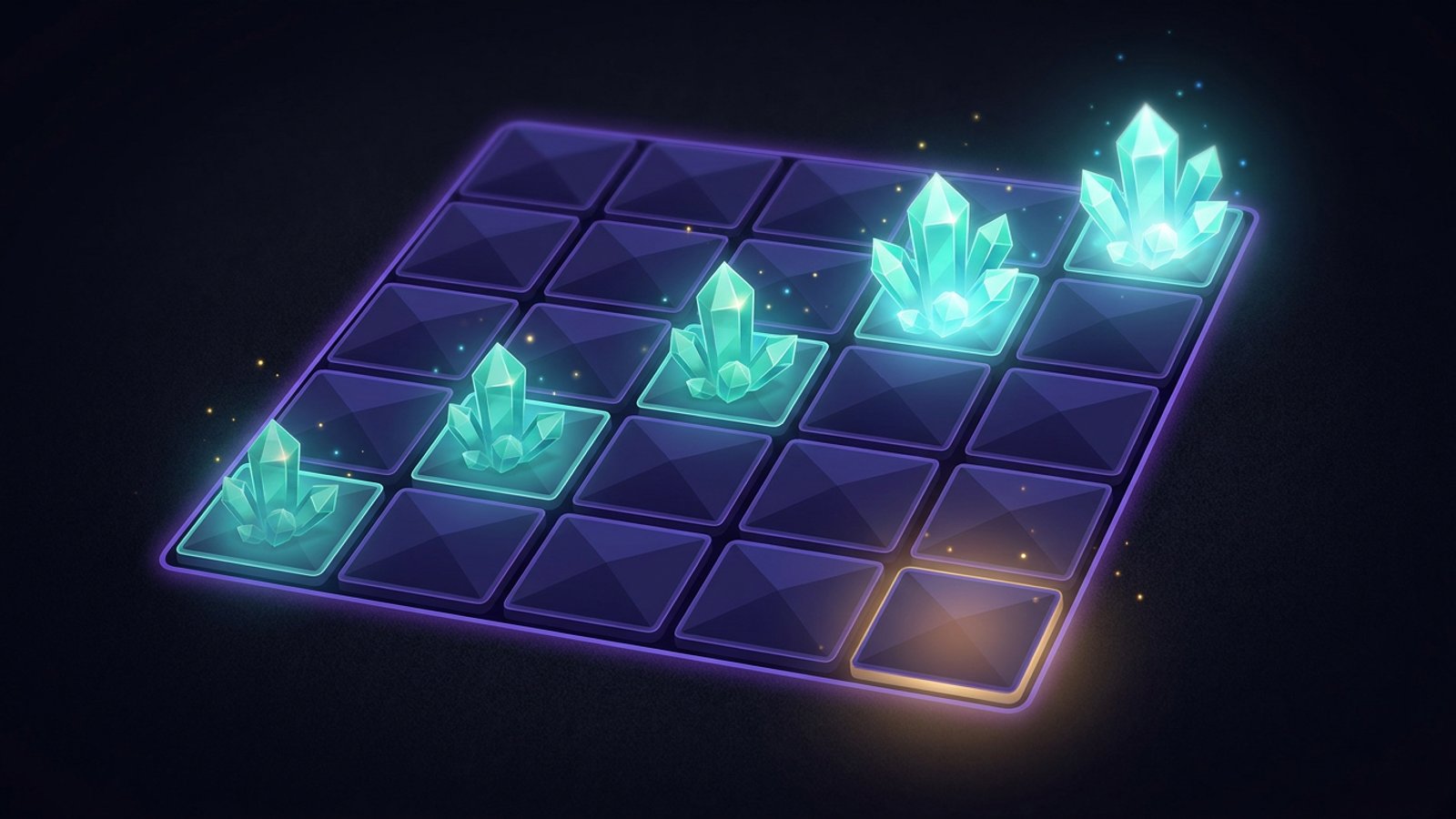
Mines is the simplest risk ladder in the casino: a 5x5 board, a number of hidden bombs you chose yourself, and one question after every safe pick. Reveal another tile, or bank what the board already shows? Nothing else in the catalog puts the stopping decision this nakedly in your hands, which is exactly why the format became a staple of provably fair casinos.
This guide covers the rules, what the bomb slider really changes, the published math behind the board and how to verify a finished round at Mines on Havoc Win.
What Mines is
Every round starts with twenty-five concealed tiles. Between 1 and 24 of them hide bombs; the rest hold gems. Each gem you reveal is safe and raises the round's live multiplier. Revealing a bomb ends the round and takes the stake. After any safe reveal you can cash out and settle the displayed amount instead of continuing.
That is the whole game. There are no paylines, no symbols and no bonus phases, just a compounding multiplier and a fuse you sized yourself before the first pick.
How to play Mines step by step
- Set the bomb count. Anywhere from 1 to 24 bombs on the 5x5 grid. More bombs make each safe pick less likely and push the multiplier up faster.
- Choose a stake and start the round.
- Reveal tiles one at a time. Every gem is safe and increases the current multiplier; the board shows the running value as you go.
- Cash out after any safe reveal to settle the displayed amount, or keep revealing. One bomb ends the round and the bet is lost.
The bomb slider is a volatility dial, not an edge dial
One bomb means long, forgiving boards where the multiplier creeps upward. Twenty-four bombs means a single tile stands between you and the board's largest payout, and every other pick loses. Between those poles, the slider trades frequency for size.
What it never trades is the return. Mines publishes a 98% theoretical RTP at every bomb count, so there is no setting that quietly pays better than another. The choice is about the shape of the session you want, and it is worth making deliberately before the round starts rather than mid-board.
The math on the table
Mines is a Havoc Original, and its 98% RTP sits on the public edge table beside every other game's figure. The 2% house edge is the entire margin: it is taken evenly across the odds of the board rather than hidden in any particular tile or moment.
RTP is a long-run model. Over one board, one evening or one lucky week, results swing far around it, and no short session is owed a return. If the difference between RTP and house edge is fuzzy, Provably Fair vs RTP walks through what each number does and does not promise.
Mines strategy, honestly
Every popular Mines system, from corner patterns to quitting after a fixed number of gems, changes which bets you make and when you stop. None of them changes the math of a single reveal, because tile results are fixed before the board is touched and no tile's appearance carries information about its contents.
That is also why the game can afford to be provably fair: the round's outcome is committed cryptographically before your first pick, and any settled round can be recomputed from its revealed seeds and checked against the commitment. A game that let a pattern beat it could not publish that proof.
If you like Mines, meet Minecash
Havoc Win also builds the format outward. Minecash turns mining into a first-person expedition: every block in a procedurally generated cavern costs your stake to break, returns 98c per $1.00 on average, and depth works exactly like the bomb slider does here, changing how wins arrive and never how much comes back. The grid teaches the logic; the cavern lets you walk around inside it.
Play Mines free
Mines is free to try at havocwin.com without an account, with the same board, bomb slider and published math as cash play. Set a small board, watch how the multiplier moves against your bomb count and find the stopping rule you can actually keep.
Mines is entertainment with a known cost, not a way to make money. Play with amounts you can afford to lose, use the session tools in your account settings, and step away when it stops being fun. 18+ only.
Frequently asked questions
What is the best number of bombs in Mines?
There is no bomb count with a better return. Mines publishes the same 98% theoretical RTP at every setting, so the bomb slider changes how wins arrive, not how much comes back over the long run. Fewer bombs pay small and often, more bombs pay rarely and larger.
Can you predict where the bombs are in Mines?
No. Each round at Havoc Win is settled provably fair: the result is fixed by a committed server seed, your client seed and the round nonce before any tile is revealed, and you can recompute a finished round yourself. Nothing on the board carries information about what a hidden tile holds.
What is the RTP of Mines at Havoc Win?
Mines publishes a 98% theoretical RTP, which is a 2% house edge. The figure is listed with every other game on the public edge table. RTP describes long-run averages across many rounds, not the outcome of one board or one session.