
Game guides
How to Play Panel Panic: Clusters, Comic Edits and Deadline Ink
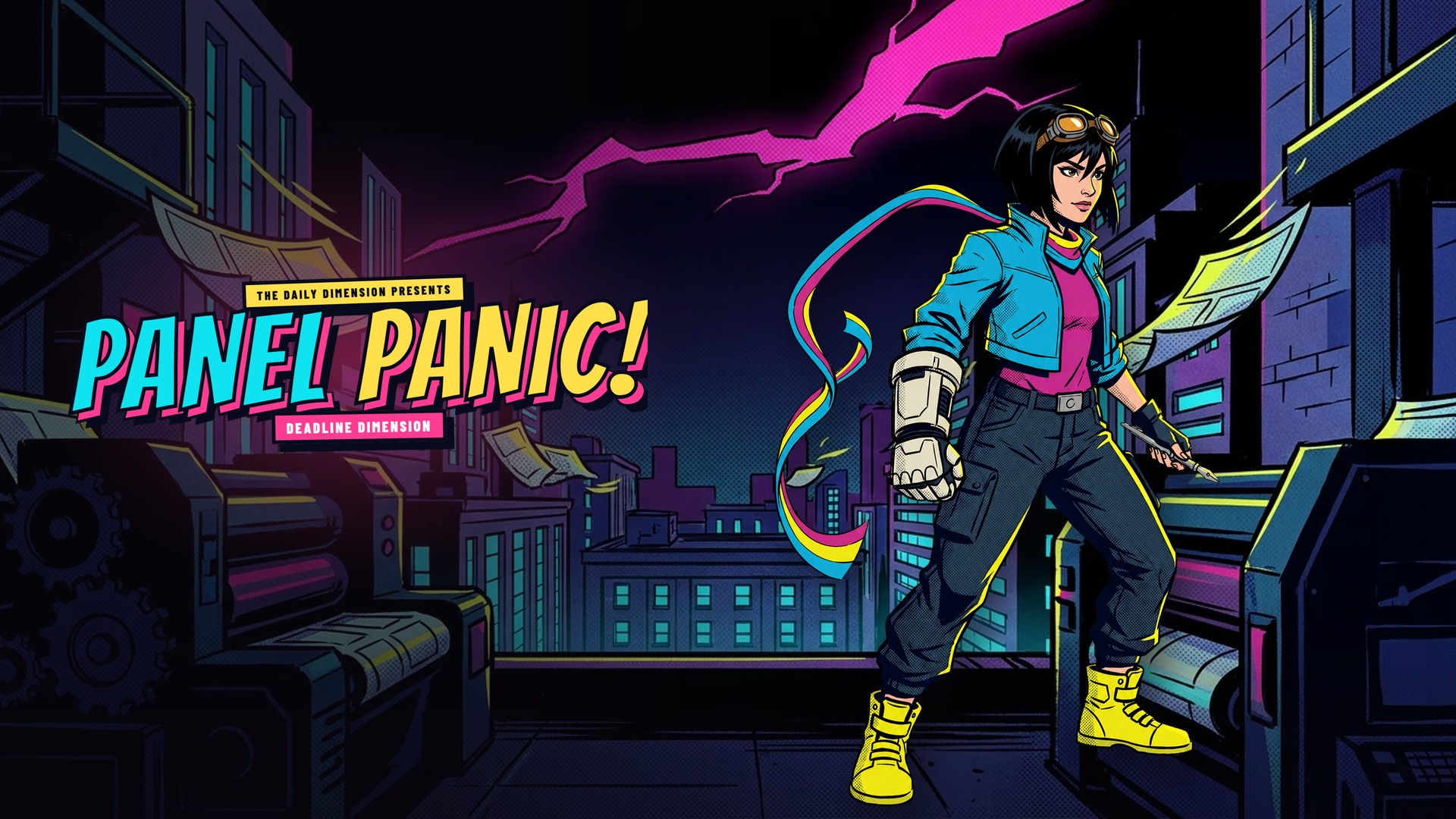
Panel Panic turns a cluster slot into a living comic page. You spin a 7×7 board, connect groups of matching panels and watch Nova act out resolver-selected edits while the grid remains the source of truth for every win. The result is theatrical, but the rules are readable once you know what to watch.
This guide covers the shipped version of Panel Panic: Deadline Dimension: cluster tumbles, its rising cascade multiplier, the three comic edits, Deadline Ink and the eight-spin feature. The game publishes a 96.0% theoretical RTP.
How a Panel Panic spin works
- Choose a stake. Confirm the total wager shown before starting the spin.
- Resolve the 7×7 page. The board fills with comic symbols and checks for matching groups.
- Find a cluster of at least five. Matching panels must touch along an edge. Diagonal contact by itself does not join a cluster.
- Clear and refill. Every paying cluster leaves the page and new panels tumble into the empty cells.
- Continue the cascade. If the refill makes another paying cluster, the same paid spin continues and the cascade multiplier advances.
- Review the final result. The spin ends only when the resolved sequence has no further paying cluster or edit to show.
Cluster size matters because a bigger connected group can pay differently from the minimum five-panel group. Open the live paytable before wagering to see the current values for each symbol and cluster size. The artwork tells the story; the settled grid and paytable determine the return.
What the comic edits actually do
Panel Panic can present three named edits: Ink Splash, Panel Tear and Editor’s Cut. These are not reaction tests or choices made after the spin. The resolver has already selected the affected tiles, and Nova’s animation shows that board change in comic-book form before evaluation continues.
- Ink Splash rewrites resolver-selected positions before the next board evaluation.
- Panel Tear changes a selected part of the page while keeping the affected cells visible.
- Editor’s Cut applies its chosen edit as part of the same resolved spin sequence.
That distinction matters for fairness. The character animation communicates the event; it does not secretly choose a result while you watch. If an edit produces another cluster, the resulting clear and refill remain part of the current spin.
Deadline Ink and Deadline Dimension
Qualifying winning base spins can charge the three Deadline Ink wells. The wells persist through eligible base play, so feature progress is visible instead of hidden inside an unknown trigger counter. Once all three are full, Panel Panic awards eight Deadline Dimension spins.
The important feature rule is multiplier persistence. In normal play, the cascade multiplier belongs to the current spin sequence. During Deadline Dimension, that multiplier does not reset between the eight automatic spins. A chain that moves it upward can therefore affect later feature spins, which is why the bonus can feel more volatile than an ordinary base spin.
Panel Panic RTP and volatility
Panel Panic publishes a 96.0% theoretical RTP, equivalent to a 4.0% mathematical house edge before any product limits or rounding. RTP describes the game model over a very large number of wagers. It cannot tell you what one session will return.
The tumble chains, board edits and persistent feature multiplier concentrate some of the game’s return in less frequent extended sequences. That creates variation around the long-run average. Read house edge versus RTP for the difference between the published price and the short-term swings a player actually sees.
Fairness, replay and sensible limits
Panel Panic is server-resolved, so the result is not decided by the timing of a local animation. Havoc Win’s fairness and replay layers let a completed round be tied back to its committed result. The provably fair guide explains what that proves and what it does not.
Use Fun play first when it is available, keep the default stake while learning the board and inspect the paytable before changing anything. Set a money limit and a time limit before balance play. A comic edit, nearly full meter or long tumble is entertainment, not a reason to extend a session.
Frequently asked questions
How do wins form in Panel Panic?
Five or more matching panels must connect horizontally or vertically on the 7×7 board. A paying cluster clears, new panels tumble into the spaces and the same paid spin can continue if another cluster forms.
What is Deadline Ink in Panel Panic?
Qualifying winning base spins can charge three persistent Deadline Ink wells. Filling all three starts eight Deadline Dimension spins, where the cascade multiplier carries forward instead of resetting after each feature spin.
What is the RTP of Panel Panic?
Panel Panic publishes a 96.0% theoretical RTP. That is a long-run mathematical return across a very large number of wagers, not a prediction or guarantee for one spin or session.
Can I predict when a comic edit or bonus will appear?
No. Ink Splash, Panel Tear, Editor’s Cut and the feature progress are parts of the resolved game outcome. Previous boards do not make a particular edit, cluster or bonus due on the next spin.