
Game guides
How to Play Prism: Seven Gems, Five Colors and One Score
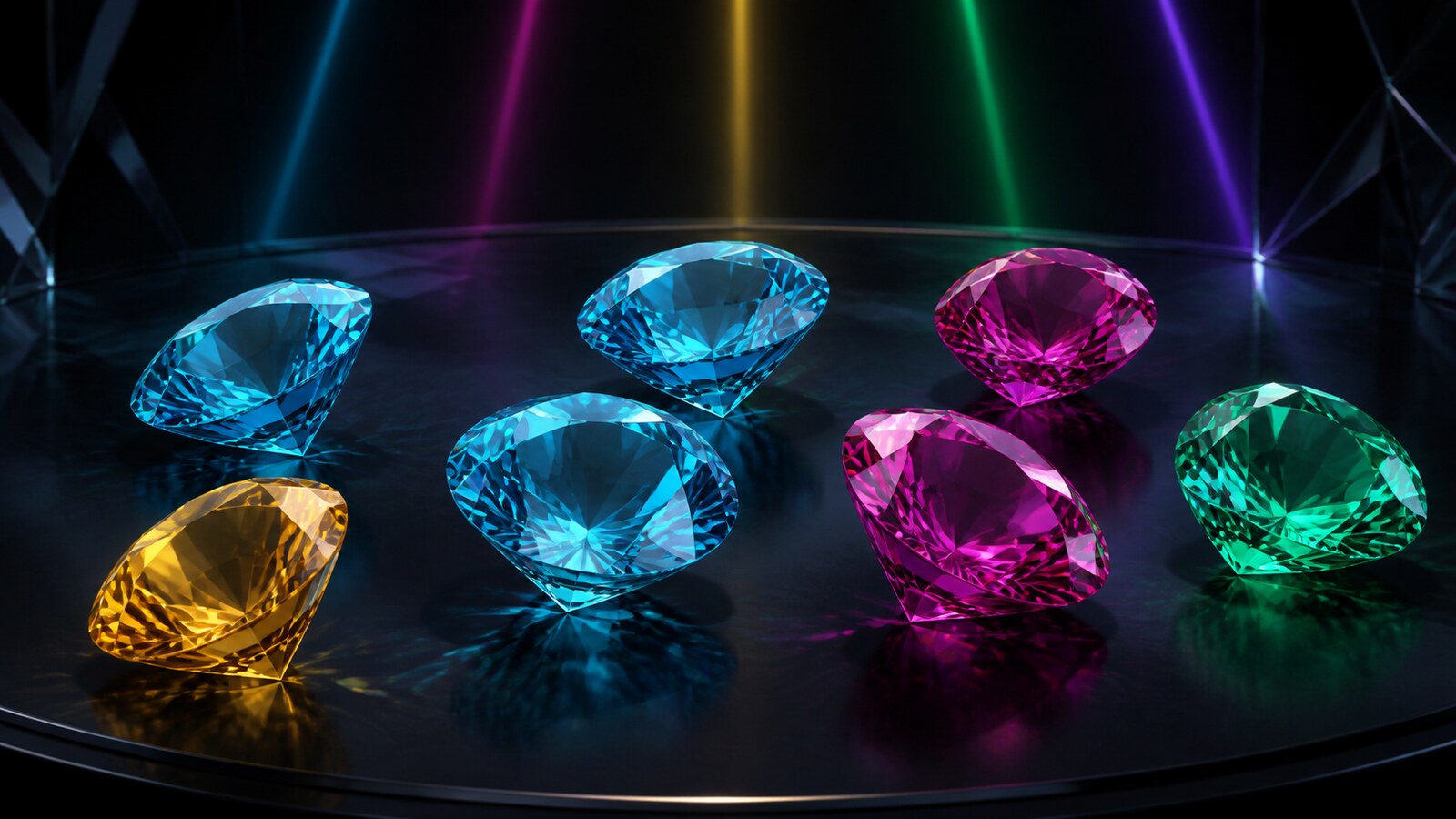
Prism has no reels, paylines or pick decision. Seven gems appear in five possible colors, and the largest color group sets the result. Three matching gems reach the first paying row. Four through seven move to progressively larger values.
This guide covers the current Prism rules on Havoc Win. Every round uses seven gems, five equally available colors, largest-group scoring and an exact 98% theoretical RTP built from the full set of possible casts.
How to play Prism step by step
- Set the stake. Confirm the amount for one complete seven-gem cast.
- Start the round. The server assigns one of five colors to each gem.
- Watch all seven appear. Position is visual and does not create a line or cluster rule.
- Find the largest color group. Count the most common color in the complete result.
- Read the paytable row. Three through seven matching gems map to increasing total-return multipliers.
- Review the completed cast. The settled group size and multiplier are part of the round result.
If two colors tie for the largest group, the score is still that shared group size. Prism does not add two groups together. A cast with three blue and three gold gems scores as a largest group of three, not six.
What largest-group scoring means
Prism ignores where a gem lands. Three red gems count whether they sit together, appear at opposite ends or arrive in a different order. This makes the result a frequency count rather than a slot-style cluster.
Groups below three do not pay. The engine’s rounded total-return values are about 0.30x for three, 1.78x for four, 13.32x for five, 118.38x for six and 1,183.80x for seven matching gems. Read the live table before playing because the product display remains the current source of truth.
A paying result can still return less than the stake
The three-gem row is about 0.30x. That is a paying result because it returns part of the stake, but it is not a profit. A $1 round at 0.30x returns about 30 cents in total. Four matching gems at about 1.78x return more than the original stake.
This distinction matters whenever a game uses total-return multipliers. Values below 1.00x reduce the loss without turning the round positive. Values above 1.00x return the stake plus some profit.
In Prism, the group label tells you which row paid. The multiplier tells you whether that return was below or above the amount risked.
How Prism’s exact RTP is calculated
Five colors across seven gems create 78,125 possible color assignments. The engine enumerates every one, records the largest group in each cast and calculates the exact probability of group sizes three through seven. It then scales the payout shape so the complete probability-weighted return is 98%.
That makes Prism’s theoretical RTP an exact combinatorial result rather than a number estimated from a short simulation. The remaining 2% is the mathematical house edge before normal currency rounding. It still says nothing about what one cast or one session must return.
Why seven matching gems pay so much
All seven gems must receive the same one of five colors. There are only five all-matching assignments among 78,125 possible assignments. The large multiplier prices that rarity. It is not a bonus that becomes more likely after several mixed casts.
Likewise, a cast showing many different colors does not charge the next round with matching energy. Every new gem color is generated for the new round. History can describe what happened, but it cannot forecast the next group.
Common Prism mistakes
- Looking for adjacent matches: Prism counts color across all seven positions.
- Adding tied groups together: only the size of the largest group scores.
- Calling every payout a profit: the three-gem multiplier is below 1.00x.
- Expecting a color to become due: previous casts do not change the next assignment.
- Judging RTP from a few rounds: 98% describes the full mathematical distribution.
Learn Prism by counting before checking the result
Use Fun play first when it is available. After each cast, count the color frequencies yourself before reading the highlighted group. This quickly teaches the scoring rule and makes it clear that position, trails and reveal order are presentation rather than strategy.
Before balance play, set a round limit, money limit and time limit. Stop when the first limit is reached. Prism is chance-based entertainment for adults aged 18 or older where local law permits. Read what provably fair means for the difference between checking a result and changing its odds.
Frequently asked questions
How do you play Prism at Havoc Win?
Set a stake and start the cast. Prism reveals seven gems, each assigned one of five colors. The game finds the largest group sharing a color. Three or more matching gems enter the paytable, and larger groups return higher multipliers.
Do matching gems need to be next to each other in Prism?
No. Prism counts color across the complete seven-gem cast. Position and adjacency do not matter. Only the size of the largest same-color group determines the result.
What is the RTP of Prism?
Prism publishes an exact 98% theoretical RTP. Its engine enumerates all 78,125 possible seven-gem color assignments, then scales the group paytable to that probability-weighted return before currency rounding.