
Game guides
How to Play Lucky Scratch: Nine Panels and One Star Count
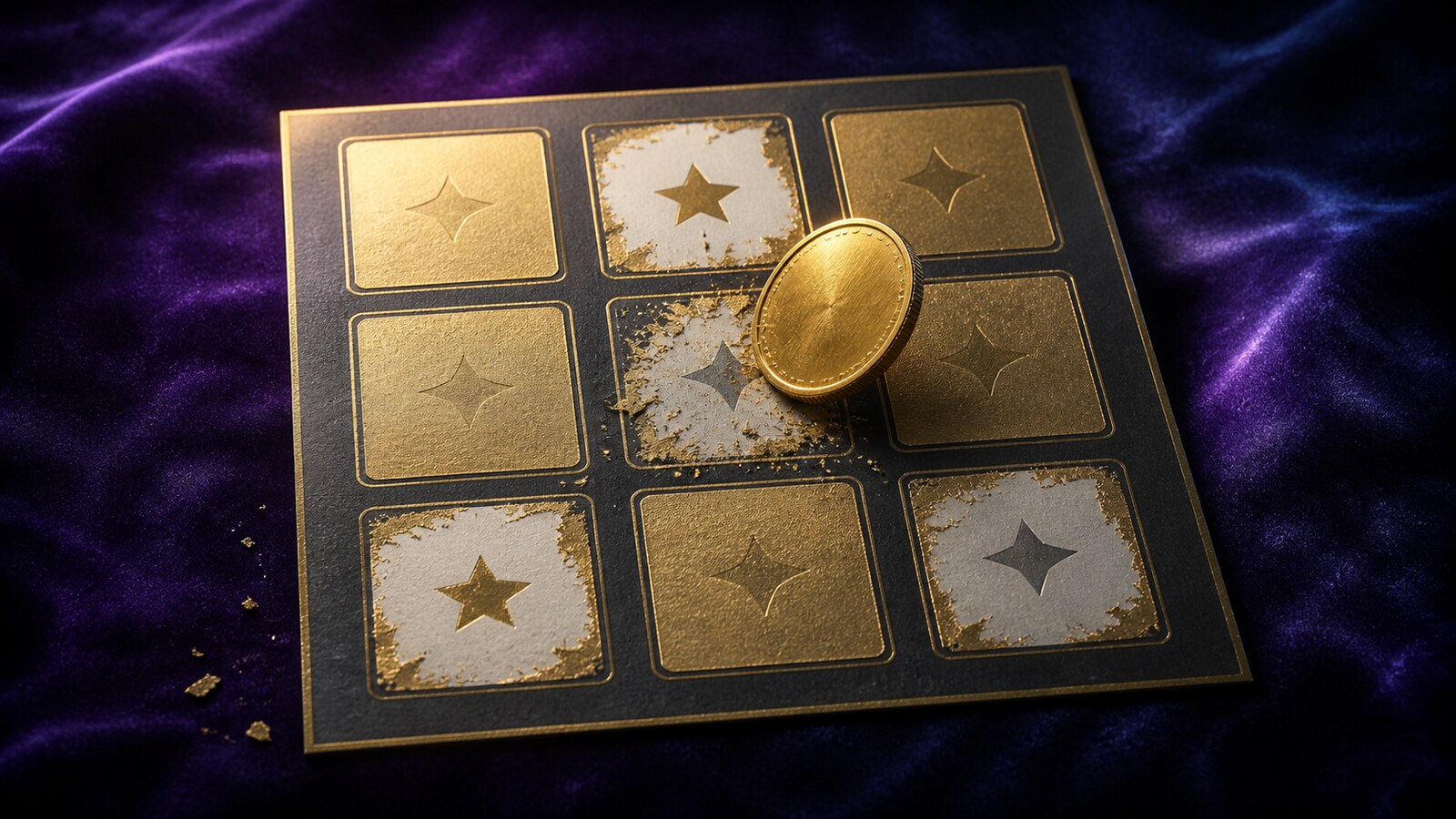
Lucky Scratch takes the familiar reveal of a scratch card and gives it one transparent scoring rule: uncover all nine panels, count the stars and use that total to find the return. There are no bonus choices hidden between panels and no reason to search for a special scratching pattern.
This guide covers the current Lucky Scratch game on Havoc Win. The first paying result starts at three stars, higher counts move through higher paytable tiers and the complete game publishes a 98% theoretical RTP.
How to play Lucky Scratch step by step
- Set the stake. Confirm the amount attached to the complete card.
- Open the paytable. Read the current return for each possible paying star count.
- Start the card. The server resolves all nine covered positions for this round.
- Scratch the panels. Reveal them in any order or use the available complete-reveal control.
- Count the stars. Three stars form the first paying tier. Additional stars move to higher listed tiers.
- Let the card settle. The final return comes from the complete star count, not the order of the reveals.
- Review the round. The settled result records the nine positions, star total and multiplier.
Why all nine panels belong to one result
The coating animation can make each panel feel like a fresh draw, but the server has already resolved the whole card. Every position belongs to the same committed round. Revealing a star does not change the chance that another covered panel contains one, and revealing a blank does not make a star due elsewhere.
This is why scratching order cannot improve the outcome. Corners, centre-first patterns, symbols that appeared on the previous card and the speed of the swipe are presentation choices. They do not alter the stored panel map or final count.
Scratching reveals the card. It does not rewrite it.
How the star-count paytable works
Lucky Scratch scores the total number of stars after all nine panels are open. A card with fewer than three stars is a losing result. Three stars enter the first paying row. Four through nine stars move upward through the current paytable, with nine stars at the top.
Read the multiplier as a total return relative to the stake. If a listed row shows 2.00x and the stake is $1, that settled row returns $2 in total. Do not read a large top row without its probability or assume it becomes more likely after several losing cards.
Lucky Scratch RTP and house edge
Lucky Scratch publishes a 98% theoretical RTP, equivalent to a 2% mathematical house edge over the long run. Its engine prices the complete set of possible star counts and paytable multipliers so their weighted average returns 98% before the normal effect of currency rounding.
That figure does not mean every 100 cards return 98 stakes. Many cards can finish below the first paying threshold, while rarer high-star cards carry larger returns. A short session can sit far above or below the model. Our RTP guide explains why the long-run percentage is not a session forecast.
Can you stop after finding three stars?
There is no partial cashout decision. Three stars means the completed card has reached at least the first paying tier, but the remaining panels still need to be revealed so the final star count can be scored. A later star can move the card to a higher paytable row; a blank simply leaves the current total unchanged.
The stake was committed to the full card when the round started. You are not placing nine separate bets and you are not risking an already won three-star return by uncovering the rest. The reveal must finish before the single round settles.
Fairness and replay
Lucky Scratch is server-resolved. The client requests a round and receives the authoritative panel pattern and final score from the game service. The scratch coating hides that result for presentation; it is not a source of randomness.
After settlement, the round’s committed seed data and replay record make the result checkable. Provably fair gaming explains how verification can show that a completed card matches its commitment without letting anyone predict the next card.
Common Lucky Scratch mistakes
- Searching for a lucky panel order: every position is already part of the committed card.
- Treating each panel as a separate bet: one stake buys one complete nine-panel result.
- Ignoring the full paytable: the top multiplier alone does not describe the game’s value.
- Expecting a star after several blanks: covered panels do not become due because of the reveal sequence.
- Increasing the stake after a losing card: the next card remains independent.
- Scratching too quickly: fast reveals do not improve the result and can make spending harder to track.
A simple way to learn Lucky Scratch
Use Fun play first when it is available. Open the paytable, reveal a few cards slowly and compare the final star count with the settled row. Try different reveal orders only to confirm that order changes the animation, not the scoring rule.
Before balance play, choose a card limit, a money limit and a time limit. Stop when the first limit is reached. Lucky Scratch is chance-based entertainment for adults aged 18 or older where local law permits, not a way to recover earlier losses.
Frequently asked questions
How do you play Lucky Scratch?
Set a stake, start one card and uncover all nine panels. The total number of stars on the completed card determines the payout. Three stars form the first paying result, with higher star counts moving to higher paytable tiers.
Does the order I scratch Lucky Scratch panels matter?
No. The server resolves the complete nine-panel card when the round begins. Scratching changes what you can see, not which panels contain stars or what the final star count will be.
What is the RTP of Lucky Scratch?
Lucky Scratch publishes a 98% theoretical RTP, equivalent to a 2% mathematical house edge over the long run. That figure is built from every possible star count and its paytable return, not guaranteed for one card.