
Fairness
Seeds, Commitments and Replay in Provably Fair Games
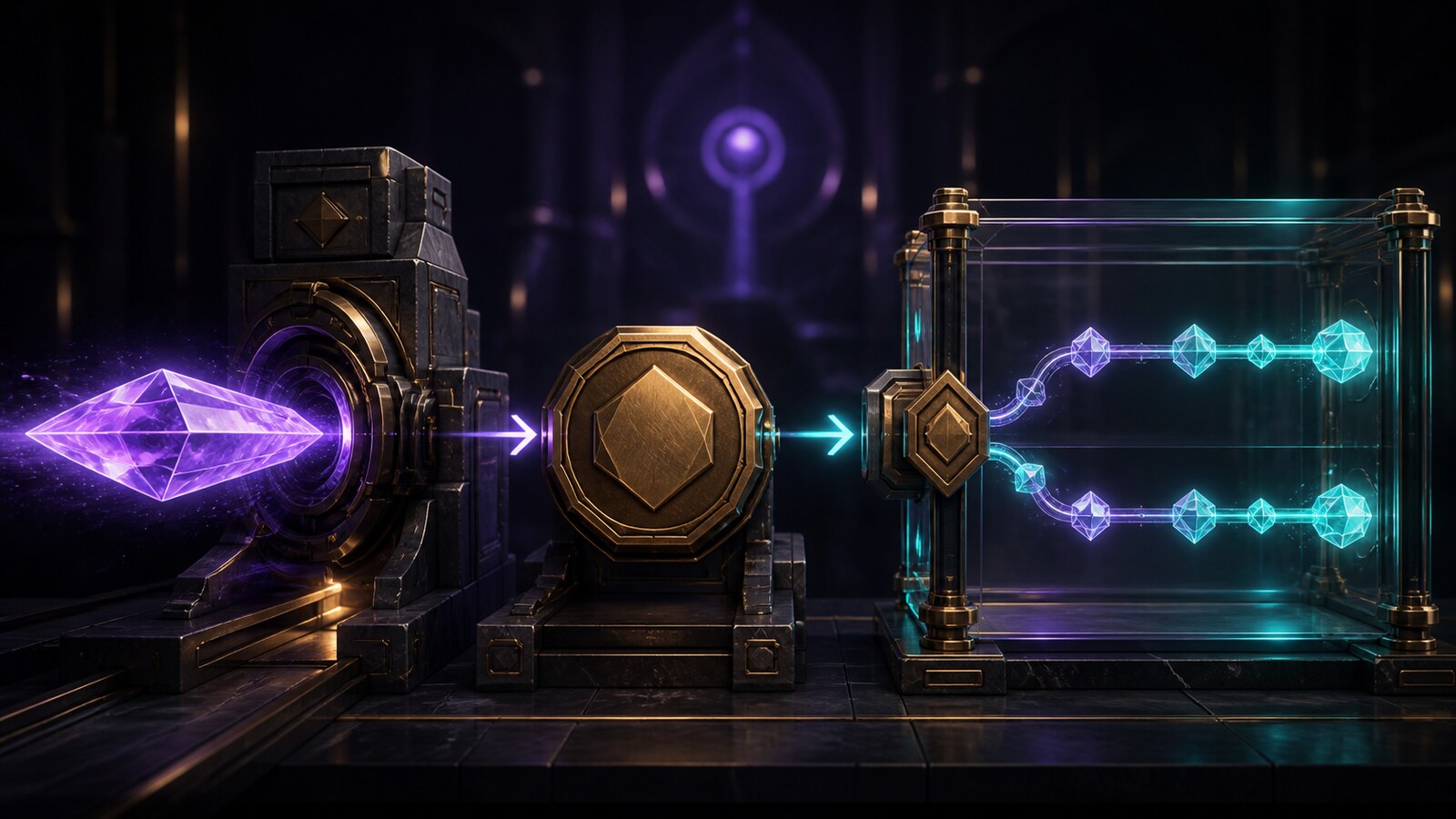
Provably fair can sound like a slogan until the pieces are separated. A useful implementation has a secret, a public commitment, player-influenced input, a round counter and a deterministic replay. Each piece closes a different gap.
1. The server seed supplies secret input
Havoc Win generates a 32-byte server seed for a play session. The seed stays secret while active so a player cannot calculate future results. The system uses that material with the client seed and nonce to initialize the cryptographically secure random stream.
2. The commitment fixes what will be revealed
Before play, the service publishes the SHA-256 hash of the server seed. A hash works like a fingerprint. It does not reveal the secret, but a later seed can be hashed and compared with the earlier commitment. A different seed produces a different fingerprint.
3. Client seed and nonce keep rounds distinct
The client seed is player-settable input mixed into the random generator. The nonce increases as rounds use the active seed pair. Changing the client seed resets the sequence position, while rotating the server seed reveals the old secret and installs a fresh commitment.
4. Deterministic game logic makes replay possible
A replay gives the same seed inputs and recorded choices to the same engine. If the logic is deterministic, it produces the same cards, reel stops, path or state transitions and the same settlement. Havoc Win’s tests compare the reproduced outcome with the stored round record.
What to check in a fairness record
- The commitment was available before the result it covers.
- The revealed server seed hashes back to that commitment.
- The client seed and nonce match the recorded round.
- The game, wager, settings and player actions match the replay inputs.
- The reproduced outcome and payout match the settled record.
A public replay link can present the recorded game and result without exposing wallet credentials or a player identity. The proof remains about the round, not about predicting the next one.
Start with what provably fair means, then compare provably fair and RNG. The provably fair page is the product reference.
Frequently asked questions
What is a server seed?
It is secret random material generated by the game service. Havoc Win publishes a SHA-256 hash commitment to the seed before play and reveals the seed when it rotates so the commitment can be checked.
What does the nonce do?
The nonce is a counter mixed with the seed inputs so separate rounds under the same seed pair use distinct positions in the deterministic random sequence.
What does a replay prove?
A successful replay shows that the stored inputs and actions reproduce the recorded outcome under the same game logic. It does not prove that the player should have won or that the game has no house edge.